

More Than a Movement: How Rev. Jesse Jackson Shaped the Politics and Soul of the DMV
 Leah HenryFebruary 17, 20265 Mins read247
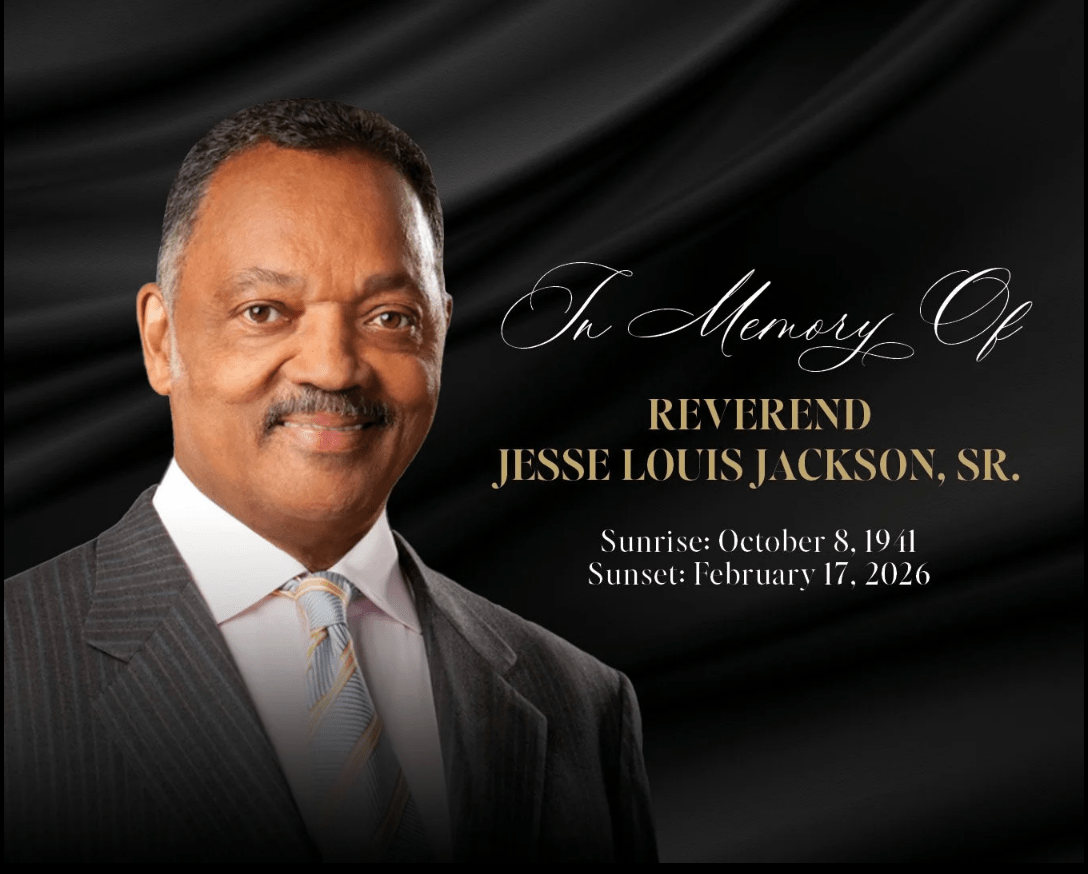
The Reverend Jesse Louis Jackson died peacefully on Tuesday morning, February 17, 2026, surrounded by his family. He was 84 years old. With his passing, the nation lost one of the last towering figures of the civil rights generation, a man whose voice rattled the walls of power for more than six decades and whose footprints are pressed into the concrete of Washington, D.C., and the broader region he came to regard as a second home.
Born Jesse Louis Burns on October 8, 1941, in Greenville, South Carolina, Jackson grew up in the segregated South and later took the surname of his stepfather, Charles Jackson. From early on, he showed the kind of defiant spirit that would define his entire life. As a teenager, he attempted to check out books from a whites-only public library. That act of quiet rebellion proved to be a preview of everything that was coming.
Jackson attended North Carolina Agricultural and Technical College, a historically Black institution in Greensboro, where he became student body president and joined sit-in protests to desegregate local restaurants and theaters. It was there, too, that he met Jacqueline Brown, who would become his wife of more than sixty years and who survives him. In 1965, he answered the call of the Southern Christian Leadership Conference and marched alongside Dr. Martin Luther King Jr. from Selma to Montgomery. That march forged a bond between the young Jackson and King that would alter the course of American history.
King appointed Jackson to lead Operation Breadbasket, the SCLC’s economic empowerment arm, and in 1968, Jackson was at the Lorraine Motel in Memphis when the assassination happened. He was standing in the parking lot below when the shot rang out. What he witnessed that night did not break him. It redirected him. He took the grief and transformed it into fuel, and for the next half century, he never stopped moving.
Washington Was Always Close
For anyone who grew up in the Washington, D.C., Maryland, and Virginia region, Jesse Jackson was not just a figure on television. He was a presence you could feel, sometimes see, and often hear reverberating through local churches, universities, and community halls.
In 1963, a young Jackson stood on the National Mall and heard Dr. King deliver the “I Have a Dream” speech. That moment embedded Washington into his sense of mission permanently. Throughout the 1970s and 1980s, as his national profile grew, so did his roots in the District. He purchased a home in LeDroit Park, one of D.C.’s historically Black neighborhoods, buying it from Howard University and making the city a true base of operations. The Rainbow Coalition, which he founded in 1984, was headquartered in Washington, giving his political machinery a permanent address on the banks of the Potomac.
His connection to the DMV was not merely symbolic. In January 2018, he delivered a sermon at a church in Fort Washington, Maryland, accusing the Trump administration of dismantling decades of civil rights progress. He was a regular visitor to Ben’s Chili Bowl on U Street, the iconic Washington institution where a photograph of him with Dr. King still hangs on the wall today. The Ali family, which owns Ben’s, remembered him Tuesday as someone who never forgot where he came from. Whenever he was in town, he made time to stop in, share a meal, and sit with the people who kept the neighborhood’s spirit alive.
In the 1991 election for the district’s shadow Senate seat, Jackson ran and won, becoming a fierce advocate for D.C. statehood. He lobbied Congress on behalf of the capital’s residents, arguing that the denial of full representation was itself a civil rights issue. That effort kept him in the halls of the Capitol constantly, pressing senators and representatives to acknowledge that the people of Washington deserved a vote just like everyone else.
His two presidential campaigns brought the DMV into direct contact with his vision. In the 1984 primary, he won the District of Columbia and Virginia, two results that stunned political observers and demonstrated that his coalition was broader and more powerful than critics had imagined. In 1988, he built on those victories, turning his Rainbow Coalition into a genuine political force that would reshape the Democratic Party for generations. Virginia Governor Abigail Spanberger said Tuesday that she remembered staying up late as a child to watch his 1988 DNC speech. Maryland Governor Wes Moore called Jackson a giant whose shoulders the state still stands upon.
The Southeast D.C. community also claimed Jackson as its own. He made visits to the Anacostia neighborhood and offered the resources of his Rainbow PUSH Coalition to activists east of the river, making clear that his concern was not just for the politically convenient parts of the city but for the neighborhoods that often felt forgotten.
A Legacy That Outlasts the Man
In 1971, Jackson founded Operation PUSH, People United to Save Humanity, breaking from the SCLC to build something of his own. He spent the following decades expanding its reach into education, employment, and political representation. In 1996, Operation PUSH merged with the National Rainbow Coalition to form the Rainbow PUSH Coalition, the organization that carried his work forward through the end of his life.
His two White House bids were historic. No Black candidate before him had come as close to a major party nomination, and by the time he finished his 1988 campaign, he had won 13 primaries and caucuses and secured more than seven million votes. Barack Obama and the Obamas acknowledged in a statement Tuesday that Jackson’s campaigns laid the foundation for what became possible in 2008. In their words, they stood on his shoulders.
Jackson’s diplomatic career was equally remarkable. He secured the release of American prisoners in Syria, Cuba, Iraq, and Yugoslavia through personal negotiations conducted at great personal risk. President Bill Clinton awarded him the Presidential Medal of Freedom in 2000 in a ceremony at the White House, a building Jackson had tried twice to call home.
In 2017, he disclosed publicly that he had been living with Parkinson’s disease since at least 2015. Later it was revealed he also suffered from progressive supranuclear palsy, a degenerative neurological condition. He was hospitalized in November 2025, and though he fought with characteristic stubbornness, his body could not continue.
The Voice Goes Quiet
The Reverend Jackson is survived by his wife, Jacqueline, their five children, including former Illinois Congressman Jesse Jackson Jr., and several grandchildren.
Virginia’s first Black Speaker of the House of Delegates, Don Scott, said Tuesday that Jackson opened doors that once felt impossible. U.S. Representative Oye Owolewa of Washington, D.C., said his leadership proved that justice is not abstract, but personal, urgent, and necessary. Those reactions, coming from across the DMV, were a testament to how deeply Jackson had woven himself into the fabric of this region’s political and civic life.
He was not a perfect man. His career contained controversies and contradictions, moments where the man fell short of the movement. But for the people who lived in the shadows of injustice and looked up to see someone fighting for them on every available stage, the ledger reads clearly enough.
Jesse Jackson spent 84 years refusing to be quiet when silence was easier. He chose the harder road, the longer march, and the more demanding pulpit. Washington, D.C., Maryland, and Virginia were not just stops on a tour. They were part of his story. And his story, in no small measure, became part of theirs.





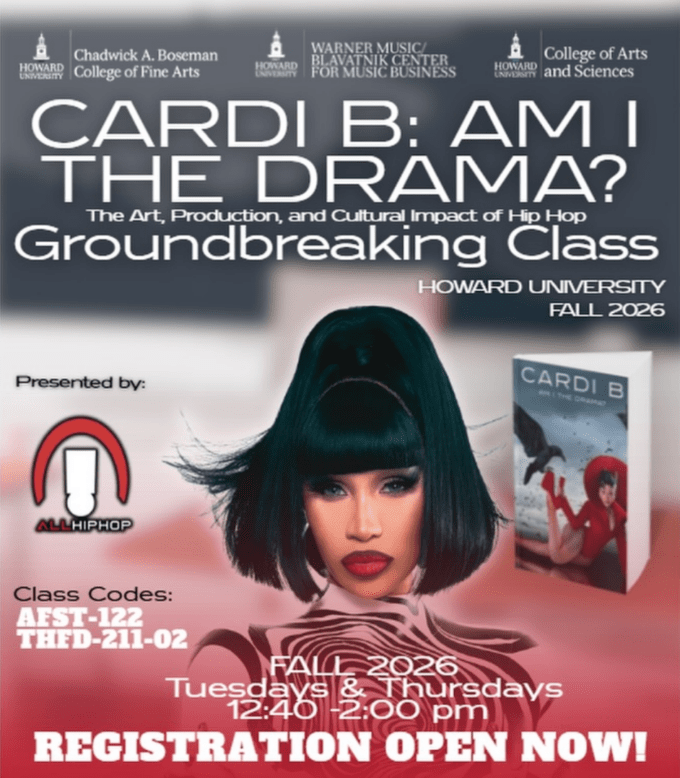
When Culture Becomes Curriculum: Cardi B’s Impact Heads to Howard University
In a move that blends culture, business, and higher education, Howard University...
Leah Henry3 Mins read
Celebrating Women’s History: Angie Ange Didn’t Leave the Culture, She Elevated It As a Media Executive
In the DMV, Angie Ange is more than a voice. She is...
Leah Henry4 Mins read

Not Just Vibes: Women Are Prioritizing Substance This Season
In a culture that has long centered beauty as the ultimate currency,...
Leah Henry3 Mins read
Teyana Taylor Takes the Lead as ESSENCE Festival Eyes a Cultural Comeback
For years, the ESSENCE Festival of Culture has stood as one of...
Leah Henry2 Mins read





Leave a comment