

5 Symbolic Moments From #BenitoBowl That Went Over a Lot of People’s Heads
 Leah HenryFebruary 9, 20263 Mins read858
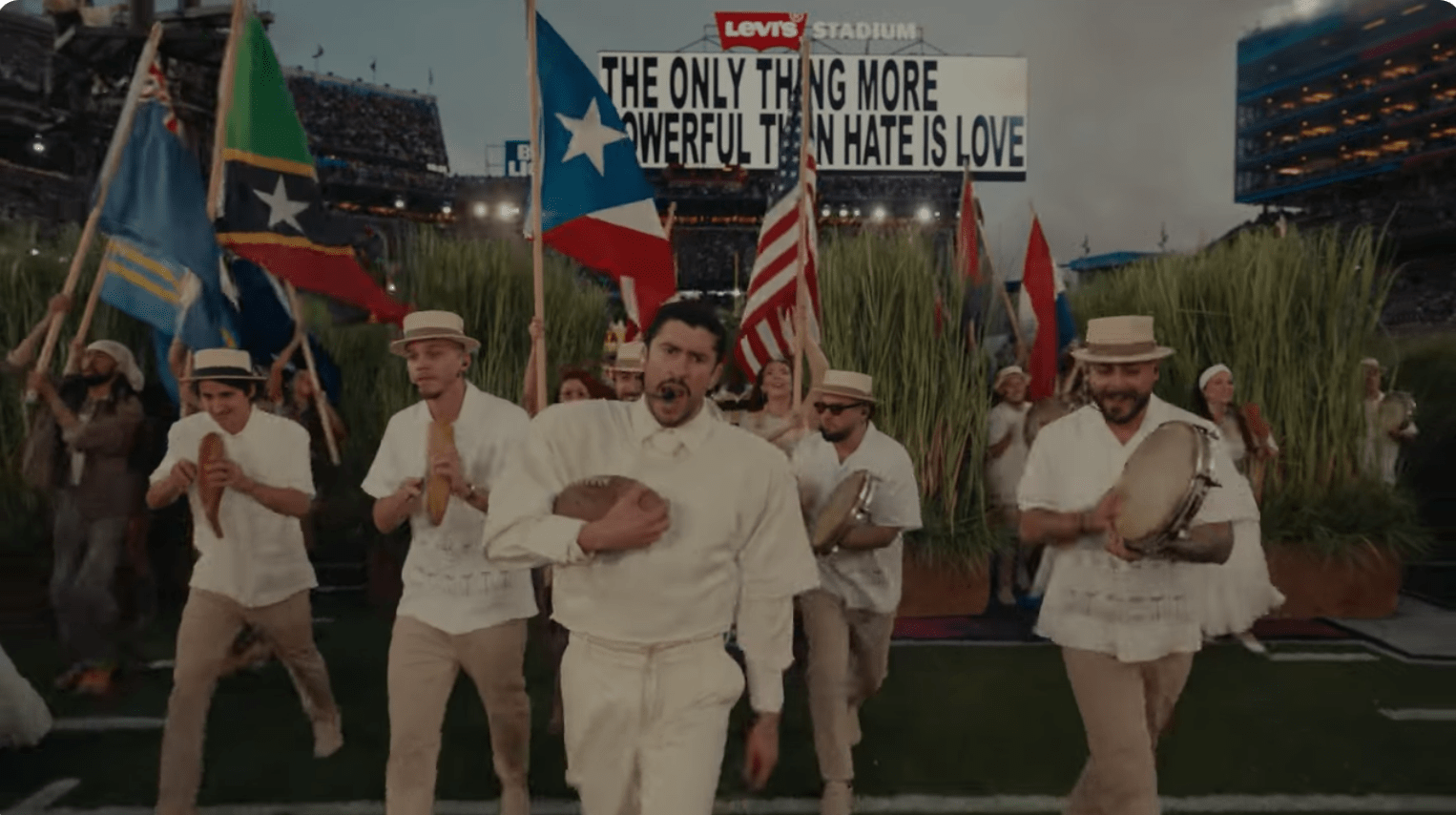
Last night’s historic Big Game was nothing short of entertaining, but for many viewers, the halftime show outshined the matchup itself between the Seattle Seahawks and the New England Patriots. While the game had its moments, it was Bad Bunny’s electrifying halftime performance that dominated the conversation long after the final whistle.
Bad Bunny made history with a fully Spanish-language halftime show, drawing an estimated 135.4 million viewers and becoming the most-watched halftime performance to date. In an era where global audiences are increasingly shaping American pop culture, the Puerto Rican superstar used the world’s biggest stage to center Latino identity, history, and pride without compromise or translation.
Whether you speak Spanish or not, the performance resonated deeply. It was rich with cultural symbolism, historical context, and intentional storytelling that painted a vivid picture of Caribbean heritage and the broader Latino experience. And while many viewers were dancing, singing along, or reacting to the spectacle, several important symbols may have gone unnoticed at first glance.
If some of the deeper meanings flew over your head, don’t worry. We’ve got you covered.
Here are four powerful symbols you may have missed during #BenitoBowl.
The Sugarcane Field
Bad Bunny opened his performance standing in a sugarcane field, a visual that immediately set the tone for what was to come. While visually striking, the imagery carried heavy historical weight. Sugarcane is deeply tied to Puerto Rico’s colonial past, representing centuries of exploitation, forced labor, and economic dependence under Spanish and later American rule.
Puerto Rico’s sugar industry once fueled global demand while leaving local communities impoverished. By beginning the performance in a sugarcane field, Bad Bunny subtly reminded viewers that the island’s history is rooted in resilience amid exploitation. It was a powerful way to ground a modern pop performance in historical truth, signaling that this show would be about more than just hits and choreography.
The Street Vendors
Throughout the performance, Bad Bunny is seen interacting with street vendors, a nod to the everyday people who form the backbone of Caribbean and Latino culture. One particularly meaningful cameo was Toñita, the owner of a legendary Caribbean social club in Brooklyn, New York.
Toñita’s club is one of the last remaining Puerto Rican social clubs in a neighborhood that has experienced rapid gentrification over the years. Her presence symbolized the fight to preserve cultural spaces amid displacement and erasure. For many in the diaspora, these clubs are more than nightlife spots. They are community centers, cultural archives, and safe spaces where traditions live on.
By spotlighting Toñita, Bad Bunny honored the elders and community leaders who have kept Puerto Rican culture alive far from the island, often without recognition or protection.
The Electrical Lines
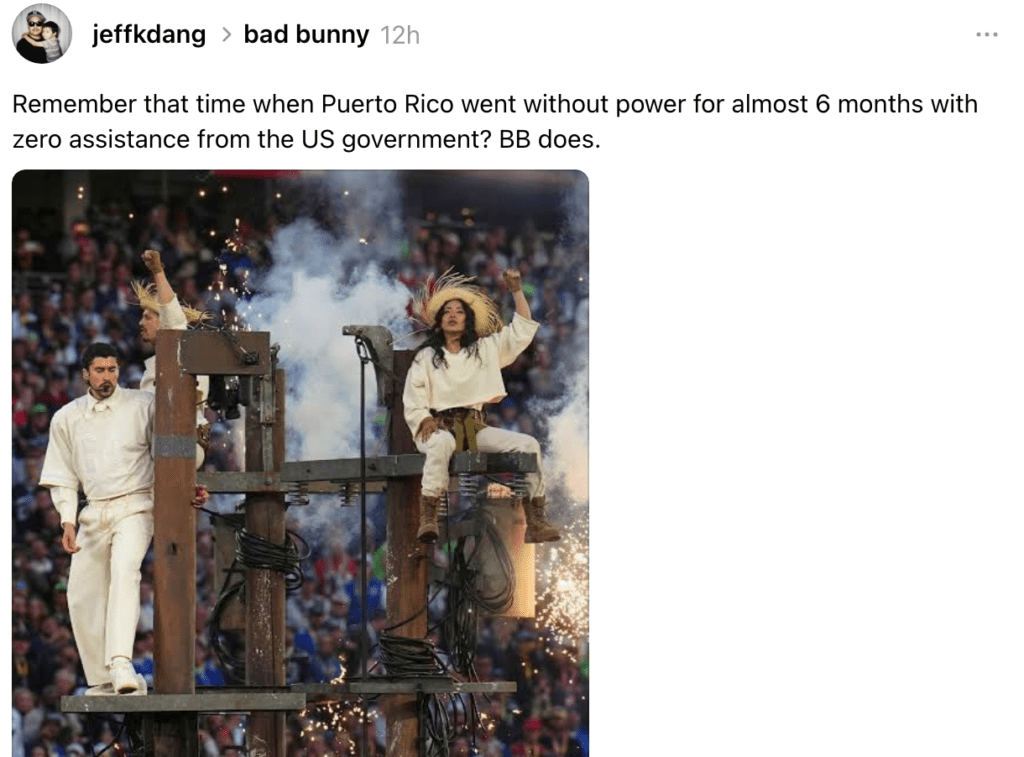
One of the most striking moments of the performance featured Bad Bunny and his dancers standing atop electrical lines. While visually dramatic, the image carried a sobering message.
Puerto Rico has faced ongoing power grid failures for years, worsened by hurricanes, government mismanagement, and a lack of sustained federal support. Millions on the island have experienced prolonged blackouts, including a devastating six-month period without power following Hurricane Maria.
Standing on power lines was a direct reference to these ongoing struggles. It symbolized not only the instability of basic infrastructure but also the endurance of Puerto Rican people who continue to survive despite neglect. In that moment, the spectacle gave way to protest, turning the halftime stage into a platform for accountability.
Latin Cameos and Lady Gaga’s Appearance
The performance was filled with cameos from notable Latino and pop culture figures, including Jessica Alba, Cardi B, Karol G, Pedro Pascal, Alix Earle, and David Grutman. Each appearance reinforced the reach and influence of Latino culture across entertainment, fashion, and media.
Ricky Martin’s brief appearance during a segment of Bad Bunny’s song “Lo Que Le Pasó a Hawái” added another layer of symbolism, bridging generations of Latino superstardom and emphasizing continuity rather than competition.
One moment that sparked conversation online was Lady Gaga’s appearance performing a Latin-inspired rendition of “Die With a Smile.” Some viewers speculated that her role symbolized English-language American pop being placed on the periphery, while a Spanish-language performance commanded the main stage. Whether intentional or not, the visual resonated with audiences who saw it as a reflection of shifting cultural power, with Latin music no longer asking for space but claiming it.
The Flags of the Americas
To close the performance, Bad Bunny stood before a wave of flags representing countries across the Americas. The moment was deliberate and unmistakable. It challenged the common misconception that the United States alone defines “America.”
By highlighting the full spectrum of the Americas, North, Central, South, and the Caribbean, Bad Bunny emphasized unity, diversity, and shared history. It was a reminder that American identity is not singular or monolithic but deeply interconnected across borders, languages, and cultures.
In just over a dozen minutes, Bad Bunny delivered more than a halftime show. He delivered a cultural statement, one rooted in pride, resistance, and truth. #BenitoBowl was not just entertainment. It was history, symbolism, and storytelling wrapped into one unforgettable performance.
Do you like this personality?


Croix Is the Rooftop You’ve Been Waiting On
Golden hour, Buzzard Point. The Douglass Bridge lit up on one side,...
 MVEMNT Staff1 Mins read
DC Made a New Law to Stop Ticket Resellers
The new rule limits how much extra people can charge to resell...
MVEMNT Staff1 Mins read
Afro Plus Fest Is Turning the DMV Into a Festival Economy Powerhouse
“We were raised in this county. This one’s for the people who...
MVEMNT Staff1 Mins read
Meet the Black Woman Reframing Bourbon as a Celebration Spirit
The Champagne of Bourbon: India Robinson Is Rewriting Who Bourbon Is For...
MVEMNT Staff3 Mins read


Leave a comment