

Americans in the Middle East Struggle to Return Home as Government Response Draws Sharp Criticism
 Leah HenryMarch 4, 20264 Mins read24
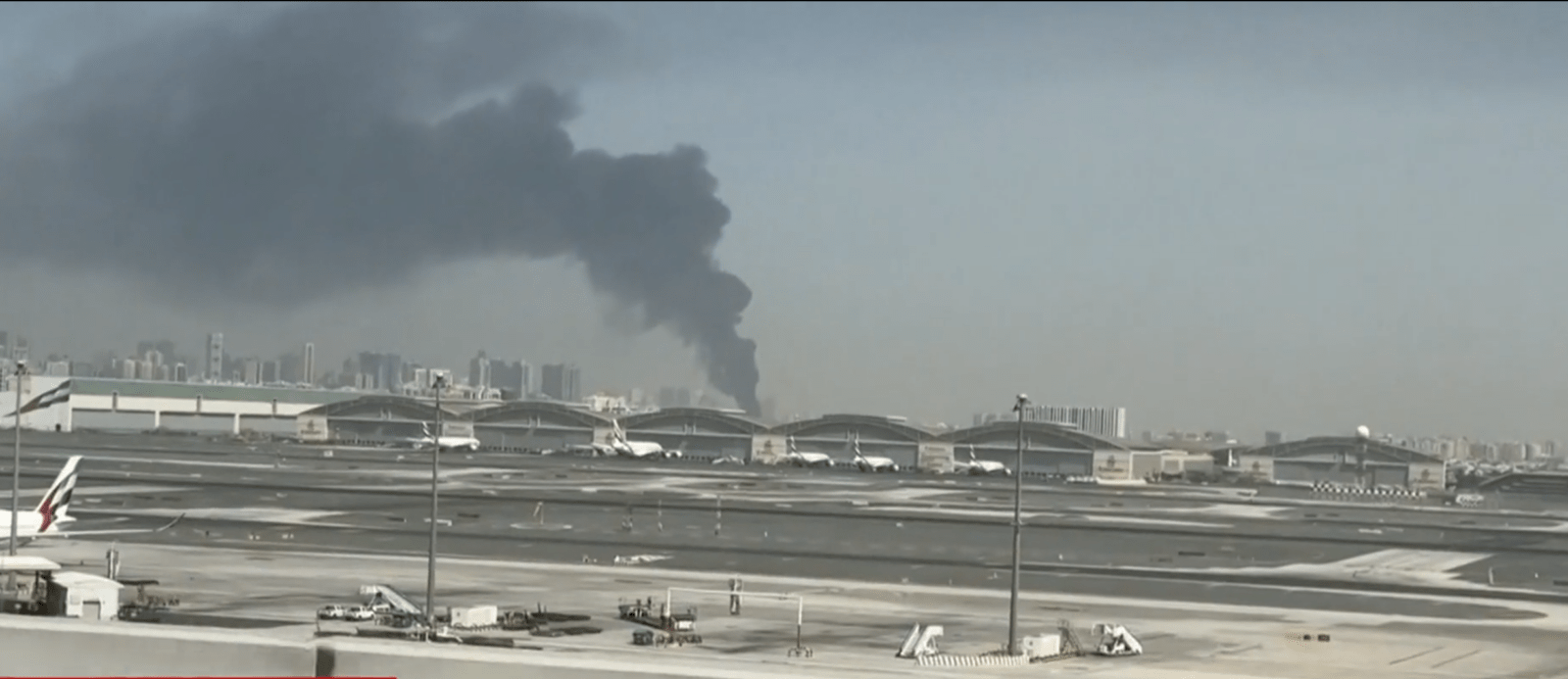
Thousands of Americans now find themselves caught in one of the most unpredictable and dangerous international situations in recent memory, trapped abroad as a war between the United States, Israel and Iran escalates across the Middle East. As tensions have mounted over the past several days, many U.S. citizens residing in, visiting, or traveling through countries in the region have grown increasingly frustrated with the federal government’s handling of the crisis and what they describe as a lack of clear, actionable support for those trying to get home.
The situation began to deteriorate rapidly after military actors from the U.S. and Israel initiated attacks against Iranian targets, prompting retaliatory strikes by Iran on allied states and foreign nationals in countries across the Middle East. This exchange of force quickly disrupted civilian infrastructure, closed airspace, grounded commercial flights, and put millions of travelers in a precarious position. As air travel options dwindled and diplomatic mission closures were announced, individuals and families at risk were left to determine how best to leave a region suddenly engulfed in conflict.
In an advisory issued late Monday, the U.S. Department of State urged American citizens in a total of fourteen countries to “depart now” using available commercial transportation, warning that serious safety risks threatened those in Bahrain, Egypt, Iran, Iraq, Israel, the West Bank, Gaza, Jordan, Kuwait, Lebanon, Oman, Qatar, Saudi Arabia, Syria, the United Arab Emirates and Yemen. More than 9,000 Americans have reportedly made it back to the United States since that guidance was released, with a significant number returning from Israel. Authorities estimate that over one million U.S. citizens could still be in the region.
Despite such advisories, the closure of major airports and cancellation of thousands of flights left many Americans effectively unable to leave. Airports that would normally serve as major hubs for international travel, such as those in Dubai and Kuwait, became symbolic of the crisis as stranded travelers watched flight after flight cancel or delay indefinitely. Commercial airline carriers including Delta, United and American Airlines warned customers that their travel plans were likely to be disrupted as the situation worsened and airspace restrictions spread.
Travelers who had expected to weather the initial days of tension now describe a different reality, one marked by fear and uncertainty. Some had planned to wait out the violence on the assumption that it would be brief. But after President Donald Trump signaled that the operation against Iran could last weeks, many shifted strategies, trying desperately to find flights as conditions around them grew more volatile. “We’re honestly trapped,” one traveler told reporters, explaining that although the government was urging departures, there were simply no flights available.
For many Americans stuck abroad, the stress of wartime conditions has come not only from the violence itself but from what they see as a lack of reliable information and assistance. Airports have been struck in some places just hours after travelers landed, forcing them to take shelter while pondering their next steps. Others, after hearing sirens and witnessing explosions overhead, have resorted to making elaborate travel plans through third countries on their own. In one instance, a pregnant woman traveling with her family opted to take a bus to Egypt and then continue via Europe before reaching home.
Travel blogger and social media influencer Alyssa Ramos, who was in Kuwait when the conflict escalated, told reporters that travelers are “taking matters into our own hands because the government simply is not helping us and there’s no way to get a hold of anyone.” The U.S. Embassy in Kuwait has since been closed indefinitely due to ongoing tensions and operations were canceled following attacks near the compound, cutting off another avenue of potential assistance.
The lack of direct evacuation support from the U.S. has drawn strong rebukes from lawmakers on both sides of the political aisle. Members of Congress have called on Secretary of State Marco Rubio to do more than issue travel advisories, urging the Department of State to deploy charter flights, military transport assets, and other resources to bring American citizens home safely. In letters to the State Department, lawmakers criticized what they described as a lack of preparedness, pointing out that commercial options are not feasible while airports are closed and flights are canceled. They insisted that the federal government has an obligation to protect its citizens abroad and called for clearer, more responsive guidance and coordination with allies to expand evacuation capabilities.
One of the central complaints of those stranded is that guidance from the State Department and its hotline has been minimal and, at times, discouraging. According to reports, people calling the emergency number were initially told not to expect assisted departure or evacuation and to register with the Smart Traveler Enrollment Program for updates. Many described frustration that the recorded messages did not offer specific instruction on how to leave or where assistance might be available. It was only after days of public outcry that the automated message was reportedly updated to reaffirm that the government is working to support Americans who wish to leave the region.
Such developments have done little to assuage the anxiety of those who remain overseas. One U.S. citizen stuck in the United Arab Emirates described feeling like a “sitting duck,” highlighting the emotional toll of waiting in a volatile environment while navigating conflicting information about evacuation plans. People stranded in multiple countries have echoed similar sentiments, expressing that they had no advance warning of how severe and disruptive this situation would become when they made travel plans or chose to live abroad.
The challenges facing Americans in the Middle East today echo past evacuations where civilians were caught in conflict zones. In previous decades, the U.S. government has conducted organized operations to extract citizens from crisis areas. But current efforts remain disjointed and reactive, with stranded travelers forced to rely on limited commercial flights, creative routing through third countries, or their own networks to find a way home.
As the war continues to spread across the region, uncertainties abound. Airspace closures, military actions, and diplomatic closures are contributing to an environment where the safety of civilians cannot be assured. This has put pressure on the U.S. government to adapt quickly, prioritize evacuations, and offer Americans stranded abroad more concrete options for returning home. But for many caught in the conflict, the initial government response has fallen well short of their expectations and needs, leaving them to manage their own routes to safety amid unfolding chaos.





Built in the DMV, Tested Online: Hanifa Navigates Backlash and Business Realities
The women’s fashion brand Hanifa has recently stunned its customers and the...
Leah Henry4 Mins read

Megan Thee Stallion Is Taking Her Star Power to Broadway With Historic ‘Moulin Rouge!’ Debut
Megan Thee Stallion is adding another title to her already stacked résumé,...
Leah Henry2 Mins read

Before the Sales Surge, the DMV Made New Balance a Cultural Classic
For decades the global sneaker conversation has started with Nike. In 2025,...
Leah Henry2 Mins read

Why Gen Z Is Buying Devices to Block Their Own Social Media
For the generation that grew up online, logging off has become the...
Leah Henry2 Mins read





Leave a comment