

Black People Face Higher Cancer Death Rates. A 10-minute Workout May Be Part of the Answer.
 MVEMNT StaffApril 24, 20264 Mins read449
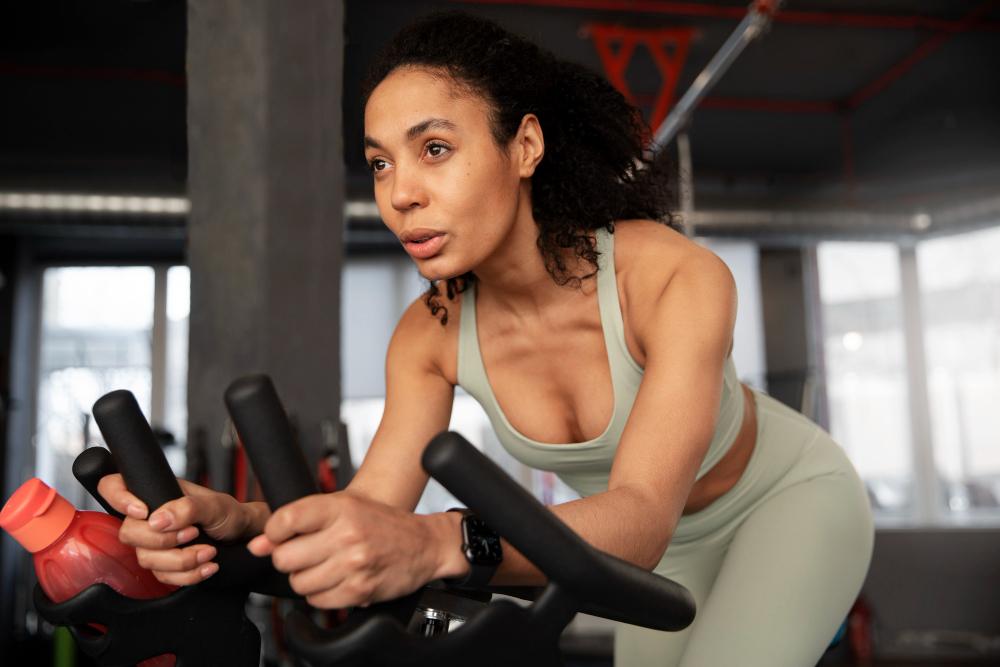
The data on cancer disparities in the Black community is sobering — and largely rooted in systemic inequity. But new science on what movement does to cancer cells gives us something powerful: a reason to keep moving.
The numbers we can’t ignore
Cancer is the second leading cause of death for Black men and women in the United States, after heart disease. According to the American Cancer Society’s 2025 report — the most comprehensive analysis of Black cancer data to date — the disparities aren’t just significant. They’re stark.
- 1 in 6 Black men will die from cancer in their lifetime
- Black men have a 16% higher cancer death rate than White men — despite only 4% higher incidence
- An estimated 73,240 Black Americans are projected to die from cancer in 2025
What makes these numbers more troubling is the gap between getting cancer and dying from it. Black women actually have a 9% lower overall cancer incidence rate than White women — yet they die from it at a 10% higher rate. That difference isn’t biology. It’s access, early detection, treatment equity, and the downstream effects of structural racism on health outcomes.
Cancer death rate disparities — Black vs. White Americans
| Cancer type | Disparity |
|---|---|
| Myeloma & stomach cancer | 2× higher death rate |
| Prostate cancer (men) | 2× higher death rate |
| Uterine/endometrial cancer (women) | 2× higher death rate |
| Colorectal & liver cancer | 40–50% higher death rate |
| Breast cancer (women) | 38% higher death rate |
| Overall cancer mortality (2019–2023) | Highest of any racial group |
Researchers from the American Cancer Society are clear: these disparities stem largely from inequalities in the social determinants of health that trace back to structural racism — not inherent biological differences. Unequal access to screening, higher rates of late-stage diagnosis, under-representation in clinical trials, neighborhood-level barriers to care, and chronic stress from racism itself all compound each other.
“The stark inequities in incidence and survival underscore the urgent need for targeted research and interventions.”
— Dr. Wayne A.I. Frederick, interim CEO, American Cancer Society
There is progress — and it matters
The same report carries something worth holding onto: Black men have seen the largest relative decline in cancer mortality of any group since 1991 — a 49% drop over three decades. In the 40–59 age group, that decline reached 65–67%. Driven by reduced smoking rates, improved treatments, and earlier detection for some cancers, it’s proof that change is possible when resources and attention are directed where they’re needed.
The gap is narrowing. But it hasn’t closed. And that’s exactly why the newest research on movement and cancer biology matters so much for this community.
What 10 minutes of hard movement actually does inside your body
A new study from Newcastle University, published in the International Journal of Cancer (January 2026), looked at something researchers hadn’t examined closely before: what happens to cancer cells when exercise-charged blood enters the bloodstream — not after months of training, but after a single 10-minute hard effort.
The findings were remarkable. Researchers took blood serum from people immediately after intense exercise and applied it directly to bowel cancer cells in the lab. What happened next: hundreds of cancer-related genes changed their activity. Genes that control tumor growth were dialed down. Genes responsible for DNA repair were switched on.
What the study found — step by step
- 10 minutes of intense exercise → releases molecules into the bloodstream
- Those molecules travel through the blood to cells throughout the body
- When they reach cancer cells → hundreds of genes change their activity
- DNA repair genes are switched ON
- Tumor growth signals are switched OFF
This is exercise as pharmacology. Your body doesn’t wait for months of consistent training to begin protecting itself — it responds almost immediately to hard movement. The researchers are now studying whether repeated sessions lead to lasting changes, and how these biological effects might work alongside cancer treatments like chemotherapy.
“Exercise doesn’t just benefit healthy tissues — it sends powerful signals through the bloodstream that can directly influence thousands of genes in cancer cells. It’s an exciting insight because it opens the door to find ways that mimic or augment the biological effects of exercise — potentially improving cancer treatment and patient outcomes.”
— Dr. Sam Orange, lead researcher, Newcastle University
Why this research is especially relevant for Black communities
When we look at the cancers with the highest disparity for Black Americans — colorectal, prostate, breast — these are also cancers where physical activity has been shown to reduce both incidence and mortality risk. Movement isn’t a cure, and it doesn’t erase the systemic barriers that drive these disparities. But it is one of the most accessible, zero-cost tools available — and new science tells us it works faster than we knew.
The bowel cancer focus in this study is especially relevant: colorectal cancer death rates in Black men are 40% higher than in White men, and 25% higher in Black women. That’s a direct overlap between a documented health equity crisis and a documented exercise benefit.
What to do with this
For you personally: Ten minutes counts. A hard walk, a sprint, a HIIT circuit — intensity matters more than duration. You don’t need a gym membership for this to work.
For your community: Movement as cancer prevention isn’t talked about enough in Black health spaces. This study gives you a specific, concrete reason to bring it up.
For advocates: Safe parks, walkable neighborhoods, and community fitness programs are health equity issues — not just quality-of-life upgrades. Access to movement is access to prevention.
For health professionals: This research supports integrating exercise into cancer prevention conversations, particularly in communities facing the highest disparities.
The gap in cancer outcomes isn’t inevitable. Progress is being made. And while we keep pushing for systemic change — more equitable access to screening, treatment, and care — movement is something we can use right now. Ten minutes. Hard effort. Your body starts fighting back immediately.
Sources: American Cancer Society, Cancer Statistics for African American and Black People, 2025 (CA: A Cancer Journal for Clinicians) · Newcastle University / International Journal of Cancer, January 2026 · American Cancer Society Report on the Status of Cancer Disparities in the United States, 2025





Showing Up: Real Ways to Support Black Men’s Mental Health
Every June, Men’s Mental Health Month asks a question that too often...
 Michelle2 Mins read

Sun’s Out, Skin’s Protected — 6 Black-Owned Sunscreens You Need
Block party season. Festival season. Cookout season. Whatever you call it, it...
MVEMNT Staff2 Mins read
Walk Clubs Are the Best Thing You Can Do for Yourself This Spring
We told you run clubs were the new dating apps, and we...
 Jade Donovan2 Mins read
Howard University Hospital’s Sickle Cell Center Gets Funding Boost, Offering New Hope for Patients Across D.C.
For many people living with sickle cell disease, the pain is not...
 Veracity Savant3 Mins read




Leave a comment