

Showing Up: Real Ways to Support Black Men’s Mental Health
 MichelleJune 5, 20262 Mins read850
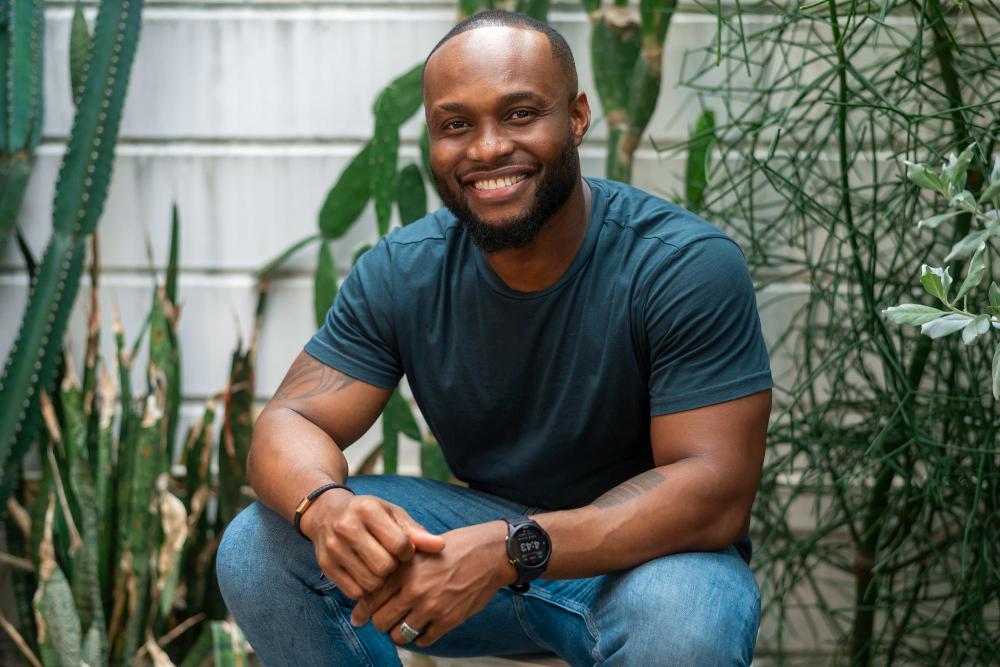
Every June, Men’s Mental Health Month asks a question that too often goes unspoken: how are the men in our lives actually doing? For Black men, that question carries extra weight. They navigate the ordinary pressures every man faces alongside the grinding stress of racism and a cultural script that often equates vulnerability with weakness.
The reality, briefly
Black men aren’t struggling because something is wrong with them. They’re struggling within a system that makes care harder to reach and harder to trust. According to the federal Office of Minority Health, Black adults in 2024 were about 36% less likely than U.S. adults overall to receive mental health treatment. Among younger men, federal data shows only about a quarter of Black and Hispanic men aged 18 to 44 with daily anxiety or depression used any treatment, versus roughly 45% of white men. The reasons are tangled: cost, lack of insurance, a shortage of Black therapists, and a well-earned mistrust rooted in a long history of mistreatment.
What support actually looks like
Start with how you talk about it. Lead with care, not clinical language. “I’ve noticed you’ve seemed weighed down, and I’m here” opens a door that “you need therapy” can slam shut. Make it safe to not have it together for a minute.
Be a consistent, low-pressure presence. You don’t need to be a therapist to be a lifeline. Check in without an agenda. Show up for the regular things, a workout, a meal, a drive, where talk can happen sideways rather than head-on. Side-by-side often beats face-to-face. When he does open up, listen before you try to fix anything.
Lower the practical barriers. The gap between “I’ll think about it” and “I have an appointment” is usually paved with logistics. Help look up therapists who take his insurance or offer sliding-scale fees. Help him find a clinician who shares his background. Handle the annoying parts: the first call, the copay, the ride.
Honor the spaces Black men already gather. Some of the best mental health work happens where trust already lives. The Confess Project trains barbers as mental health advocates, turning the barbershop into a place men can talk. Faith communities, fraternities, and peer circles can all be entry points.
Resources worth knowing
- Black Men Heal (blackmenheal.org): free, limited therapy with clinicians of color.
- The Confess Project of America: barber-led mental health advocacy.
- BEAM (beam.community): peer support and a Black therapist directory.
- Therapy for Black Men (therapyforblackmen.org): a provider directory.
You don’t need perfect words or a degree to make a difference. Most of what helps is ordinary and repeatable: paying attention, staying close, and lowering the small barriers between a man and the help he deserves.
If you or someone you care about is struggling, support is available. In the U.S., call or text 988 any time to reach the Suicide and Crisis Lifeline.







Black People Face Higher Cancer Death Rates. A 10-minute Workout May Be Part of the Answer.
The data on cancer disparities in the Black community is sobering —...
 MVEMNT Staff4 Mins read

Sun’s Out, Skin’s Protected — 6 Black-Owned Sunscreens You Need
Block party season. Festival season. Cookout season. Whatever you call it, it...
MVEMNT Staff2 Mins read

Walk Clubs Are the Best Thing You Can Do for Yourself This Spring
We told you run clubs were the new dating apps, and we...
 Jade Donovan2 Mins read

Howard University Hospital’s Sickle Cell Center Gets Funding Boost, Offering New Hope for Patients Across D.C.
For many people living with sickle cell disease, the pain is not...
 Veracity Savant3 Mins read





Leave a comment